

Does Biodegradable Tableware Survive Delivery and Monsoon?
Does rice husk tableware survive delivery jostling, heat, oil and monsoon humidity? Honest answer: bowls and deep containers yes, a flat plate is not a box.
Last June, a cloud kitchen owner near Sarkhej messaged me at 9pm during the first heavy rain of the season. He had switched his biryani boxes and curry bowls to our rice husk tableware two weeks earlier. That night a rider had left a bag in the rain for a few minutes, and the customer complained the packaging felt damp. He wanted to know, in plain words, whether he had made a mistake going biodegradable right before monsoon.
He had not. But his question is the right one, and it deserves an honest answer rather than a brochure.
Is biodegradable tableware good for food delivery?
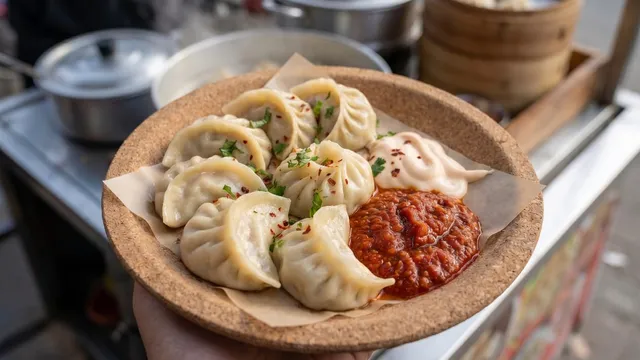
Short answer: yes, if you match the format to the food. Rice husk bowls and deeper containers survive delivery jostling, hot food, and oil for a normal transit window. A flat plate does not, because a plate was never meant to be a sealed container. If you are evaluating biodegradable tableware for food delivery, the real decision is not plastic versus rice husk. It is which shape you put the food in.
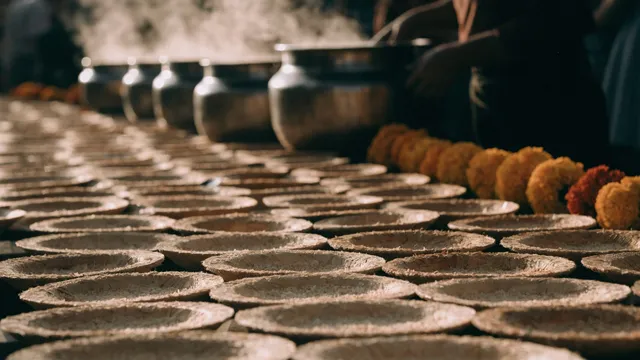
Rice husk and rice bran tableware is compression moulded at 180 to 200 degrees Celsius with no water added. That single fact drives most of its delivery behaviour. Because there is no water in the forming process and no paper pulp fibre soaking things up, the finished piece does not go soft the way a paper plate does when it meets steam and gravy. The rice bran is the natural binder, so there is no plastic lining to melt or leach either. That makes it genuinely useful for cloud kitchen eco packaging, with one honest limit I will come back to.
Heat and oil in a sealed delivery bag
A delivery bag is a small, hot, humid box. Food goes in near boiling, the bag zips shut, and for the next 30 to 45 minutes everything inside stews in its own steam. This is the real test, not a photo on a table.
Here is how rice husk tableware behaves in that bag:
- Heat is not a problem. The material is stable at the temperatures hot Indian food arrives at, and it is microwave safe with no coating to worry about. If you want the material science on why heat does not bother it, I wrote a full breakdown in our post on microwave safety and disposable plates.
- Oil is handled well, not perfectly. A rice husk plate under a hot, oily paratha or a plate of biryani holds its shape and does not turn translucent and floppy the way a thin pulp plate can. It is not fully grease-proof forever, though. Sit very oily food on an open plate for an hour and oil will slowly mark the surface. For a normal delivery window it is fine.
- Steam is the quiet enemy, and shape decides the winner. In a sealed bag, steam condenses on every surface. On a deep bowl with a lid, that condensation runs back into the food. On an open flat plate, that same moisture has nowhere to go, and it pools at the edges.
That last point is the whole argument for choosing bowls over plates for delivery.
Structure and stacking in transit
Rice husk composite is roughly 20 percent silica by weight, which is what gives it real rigidity. In practice that means it takes the knocks of a two-wheeler over Ahmedabad roads better than foam or thin pulp. A rider grabbing a bag, a bag swinging off a hook, a stack of orders shifting at a light: none of that cracks a properly packed piece.
The important difference is between open and enclosed shapes:
- A deep bowl carries its strength in its walls. Full of dal or curry, sealed with a lid, it resists a squeeze from the side and does not flex the food out.
- A flat plate is rigid but open. Held from one edge with a full, wet load, it can flex, and anything liquid on top will slide. This is not a material weakness. It is basic geometry. No open plate, in any material, is a delivery container.
So stack and transport plates for dry, served food, and use bowls for anything with gravy.
What to actually use for delivery
| Dish type | Right format | Why |
|---|---|---|
| Dry biryani, rolls, dry sabzi, snacks | Deep bowl or deep container | Walls hold the load, easy to seal |
| Dal, curry, gravy, chole | Deep bowl with a secure lid or film | Contains liquid, condensation runs back in |
| Thin soup, rasam, thin kadhi | Deepest container you have, sealed tight | Liquid needs walls and a real seal |
| Served-on-arrival thali, dine-in style | Plates | Open format is fine when it is not sealed and jostled for 40 minutes |
For most delivery menus, a deep bowl does the heavy lifting. Our 180 ml rice husk bowl is the piece most cloud kitchens start with, paired with a compatible lid or a heat-seal film. The plate is for the dine-in and served side of your business, not the sealed-bag side.
The honest limit: we make tableware, not a plastic-lined leakproof box. A flat rice husk plate is not, and will never be, a spill-proof delivery vessel. If a menu is mostly thin, wet, saucy food, plan around deep sealed containers and set that expectation with your team before you buy, not after a leaked order.
Monsoon: the storage risk is bigger than the transit risk
Here is the part that surprises people. The rain a rider stands in for two minutes is not what damages your stock. The warehouse the stock sits in for two months is.
India’s southwest monsoon runs roughly June to September, and per the India Meteorological Department it sets in over Kerala around 1 June and covers the whole country by early July. That is three to four months of high humidity across most of the country. For any biodegradable stock, sustained humidity is the thing to manage.
Rice husk tableware resists moisture well because it was moulded dry, and it carries a shelf life of about 12 months in dry storage. But “dry storage” is doing real work in that sentence. Store it badly through monsoon and you can quietly cut that number in half, not because the plate fails, but because open cartons pick up damp, musty smell, and surface marks that make the pieces unservable.
The rules are boring and they work:
- Keep cartons sealed until you need them. The box and inner wrap are your humidity barrier. A carton opened and loosely closed is not.
- Get stock off the floor. Concrete wicks ground moisture, especially at night. Pallets or a simple raised platform with a few inches of air underneath solves it.
- Keep cartons away from external and damp walls, which pass on whatever the weather outside is doing.
- Rotate first in, first out, so no batch sits open across the entire rainy season.
I go deep on every one of these, including the ₹400 hygrometer that tells you if your godown has a problem, in our post on storage gotchas with biodegradable tableware. If you run a delivery kitchen through monsoon, read that one before you place a big order.
The honest verdict for delivery brands
Rice husk tableware survives food delivery when you use it the way it is built to be used: bowls and deep containers for anything wet, sealed properly, moved within a normal window. It handles heat, oil, and the knocks of transit better than pulp or foam. What it will not do is turn a flat open plate into a leakproof box, and no honest supplier should tell you otherwise.
Get the format right and the storage right, and monsoon is a scheduling detail, not a threat to your stock.
Aura Farmers makes biodegradable tableware, plates, bowls, cups, and cutlery, from rice husk and rice bran. For bulk orders or delivery-format advice, reach us on WhatsApp at +91 81403 47773. Made in Ahmedabad, shipped pan-India.
Source: Monsoon timing per the India Meteorological Department (mausam.imd.gov.in), which defines the June to September southwest monsoon and its onset over Kerala around 1 June.
Frequently Asked Questions
Is biodegradable tableware good for food delivery?
Yes, for the right format. Rice husk bowls and deep containers hold up well to heat, oil, and 30 to 45 minutes of transit. Flat plates are made for served, dine-in style food, not for saucy or soupy delivery, because a plate is not a sealed leakproof box.
Does humidity damage rice husk plates?
Not quickly, but sustained high humidity is the main storage risk. Rice husk tableware is compression moulded at 180 to 200 degrees Celsius with no water added, so it resists moisture better than paper pulp. Kept sealed, off the floor, and away from damp walls, it holds its full shelf life through the monsoon.
Can rice husk bowls hold gravy or curry for a delivery order?
A deep rice husk bowl holds gravy, dal, and curries well for a normal delivery window when it is sealed with a secure lid or film. The bowl walls give it structure that a flat plate does not have. For very thin soups over long holds, use the deepest container you have and seal it tightly.
How should I store biodegradable tableware during monsoon?
Keep cartons sealed until you need them, raised off concrete floors on pallets, and away from external or damp walls. Aim to store below 65 percent relative humidity. Rotate stock first in, first out so nothing sits open through the whole rainy season.
Does hot oily food make rice husk plates soggy in a delivery bag?
Rice husk tableware handles hot and oily food better than pulp because it has no water-based structure to absorb moisture and no plastic coating to soften. It is not fully grease-proof forever, so for very oily or wet dishes over long transit, use a deep container and seal it rather than an open plate.