
Ganesh Chaturthi: Plastic-Free Pandal Catering
Ganesh Chaturthi 2026 falls on 14 September. How mandals plan an eco-friendly festival: sizing multi-day mahaprasad, ordering early and composting after.
A mandal treasurer from Maninagar called me two weeks ago. His committee had already booked the idol, the sound system and the caterer. What he had not sorted out was the plates. Last year they used thermocol, got a warning from the municipal cleanup crew, and spent the day after visarjan pulling soggy foam plates out of the storm drain. This year he wanted to do it right, and he wanted to know one thing: how early do we have to order?
That is the right question to ask in July. For an eco friendly Ganesh Chaturthi, the switch is straightforward: use compostable rice husk plates, bowls and cups for prasad and mahaprasad, size the order to your biggest serving day with a buffer, order three to four weeks ahead because demand spikes, and compost the plates after visarjan. The hard part is not the product. The hard part is planning it before the last-minute rush, and this year the festival gives you a clear deadline.
When is Ganesh Chaturthi 2026, and why plan now
Ganesh Chaturthi 2026 begins on Monday, 14 September, and runs up to ten days, ending with Ganesh Visarjan on Anant Chaturdashi, Friday, 25 September. That is the calendar most mandals in Maharashtra and Gujarat plan around, whether you immerse the idol on day one and a half, on the fifth day, or hold the full ten days.
Reading this in mid-July, the festival is still about eight weeks out. That is the window where a committee can decide calmly and lock quantities, before every caterer and mandal in the city is chasing the same suppliers in the first week of September.
Why mandals are switching to compostable tableware
The eco Ganesh movement is not a marketing idea. It is a response to a real problem the mandals themselves have to clean up.
The regulation is real. The single-use plastic ban has been in force across India since July 2022, and it covers plastic plates, cups, cutlery and polystyrene (thermocol) plates. In Gujarat and Maharashtra, municipal crews now issue warnings and fines at public gatherings. A pandal is about as public as it gets.
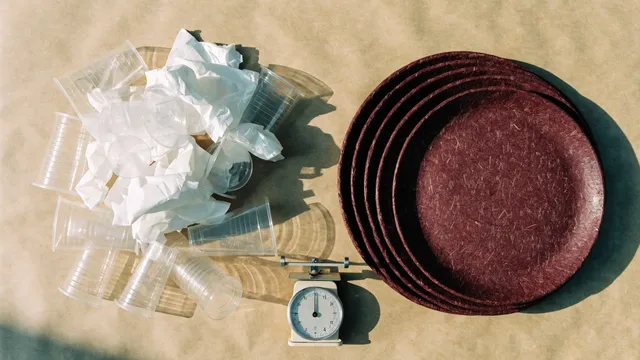
The cleanup falls on the committee. A ten-day pandal feeding hundreds of people a day generates a mountain of used plates. If those plates are thermocol and plastic, they do not go away. They end up in drains, on the street, and in the same immersion water the idol goes into. Compostable plates break down instead of becoming next month’s litter.
Devotees notice. A mandal that serves prasad on a clean, plant-based plate and composts it after sends a message that lines up with the spirit of the festival. It reads as care, not box-ticking.
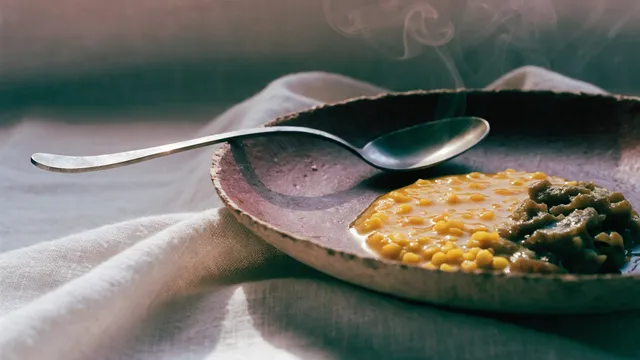
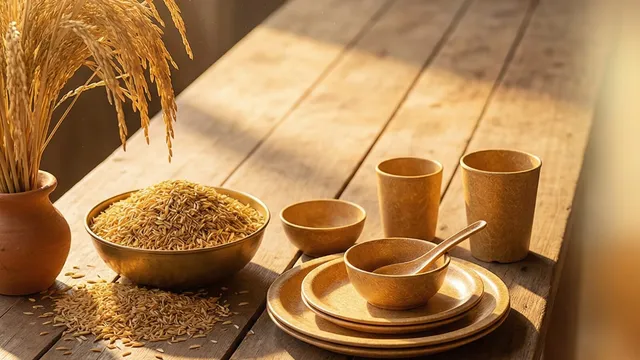
Rice husk and rice bran tableware fits this well: it is made from agricultural waste, holds up under wet festival food, and is home-compostable. There is no plastic and no synthetic binder. The bran is the natural binder.
How to size prasad plates for multi-day mahaprasad
This is where most mandals either over-order and waste money or under-order and run out on the main day. Here is the method we walk committees through.
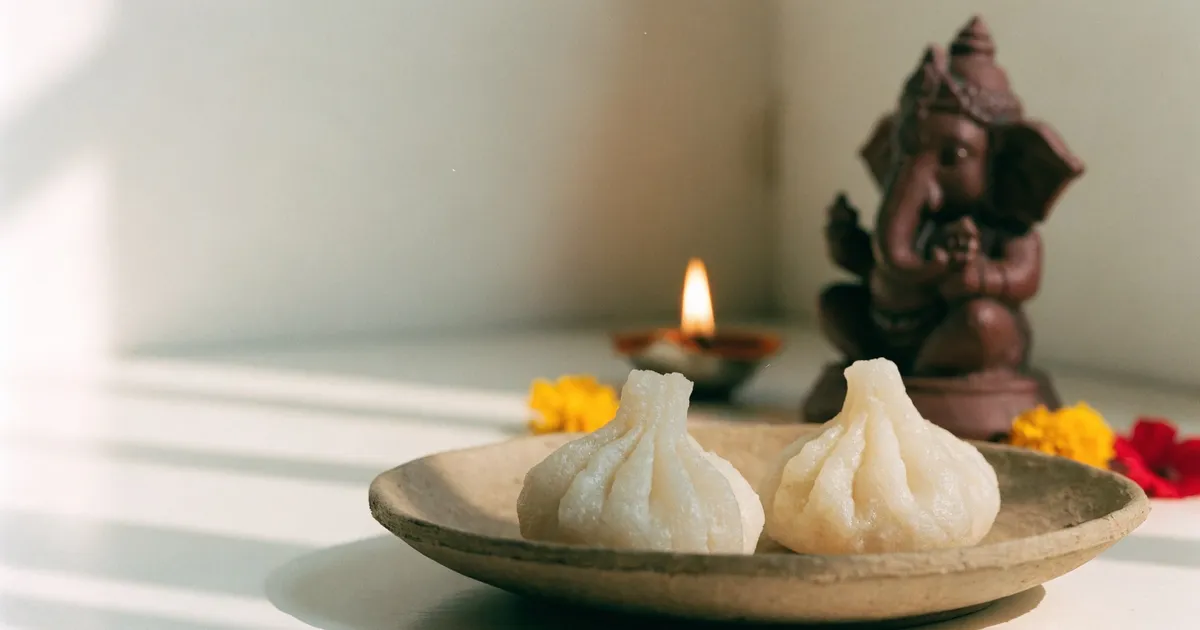
- Separate daily prasad from mahaprasad days. Daily aarti prasad (a modak, a laddoo, a small helping) needs a small plate or bowl. A full community meal needs a large plate. These are different counts, so do not blend them into one number.
- Anchor on your biggest serving day. Estimate how many people you feed a full meal on your peak day, usually the main mahaprasad day or Anant Chaturdashi. That number sets your large-plate order.
- Add a buffer of 15 to 20 percent for seconds, cracked plates, and extra guests. Running out mid-service is worse than a small surplus you use next day.
- Multiply daily items by the number of days you serve them.
A worked example. A mid-size mandal serves aarti prasad to around 300 people every day for ten days, and a full mahaprasad to 800 people on the main day. The rough order is 300 x 10 = 3,000 small plates or bowls, plus 800 + 20 percent = roughly 950 large plates for the mahaprasad day. Cups follow the same logic if you serve tea or panha.
Which item for which dish
| Serving | Best item | Why |
|---|---|---|
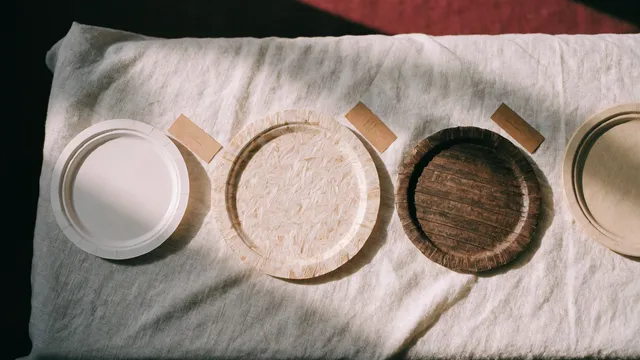
| Modak, laddoo, dry prasad | 7” plate | Small footprint, easy to hand out at aarti |
| Sabudana khichdi, upma, wet prasad | 180 ml bowl | Holds moisture, no leak, no sag |
| Full mahaprasad thali | 10” or 12” plate | Rice, dal, sabzi and sweet without crowding |
| Tea, kokum, panha, buttermilk | 120 ml or 250 ml cup | No plastic coating to leach into hot drinks |
| Mixed full-meal service | Dinner combo set | Plate, bowl and spoon together, simpler to count |
If you would rather not count each item separately, a dinner combo set bundles the plate, bowl and spoon, which makes ordering and stocking easier for a committee that is doing this for the first time.
Ordering lead time: order early, because demand spikes
The single most useful thing I can tell a mandal is this: do not wait for the first week of September.
Festival demand behaves like wedding-season demand. It is concentrated in a short window, everyone wants similar items at once, and the last-minute buyer pays more for less choice. We see inquiry volume climb sharply in the two weeks before any major festival.
The practical timeline for Ganesh Chaturthi 2026:
- Now to mid-August: decide your menu, estimate your counts, and get a quote. This is the calm window.
- By late August: lock and confirm your order so it is produced and reserved against your name.
- Early September: delivery, with buffer time before the 14th for any top-up.
We typically confirm availability within a day of an inquiry, and standard orders ship in three to five working days from Ahmedabad. But those timelines assume normal weeks. In the pre-festival rush, “I need 3,000 plates in 48 hours” is a hard order to fill for anyone. Committing three to four weeks ahead gets you guaranteed availability and better bulk pricing. If you are still weighing the switch in general, our guide for caterers going plastic-free covers the operational side in more detail.
After visarjan: disposal and composting
The plate does its real work after the meal. A compostable plate that lands in a mixed municipal bin still breaks down eventually, but you lose most of the benefit and the 60 to 90 day composting window.
Keep it simple at the pandal:
- Two bins, clearly labelled. One for “food and plates” (everything compostable), one for “everything else.” More categories create confusion when a crowd is moving fast.
- Place bins where people eat. A composting bin five metres away gets used. One behind the kitchen does not.
- One volunteer on bin duty per shift. A person redirecting plates beats any amount of signage.
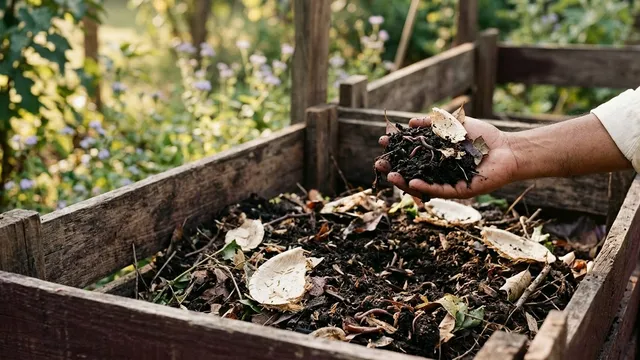
- Compost or hand off. A simple two-bay compost setup handles the volume if you have outdoor space. If not, several cities including Ahmedabad, Pune and Mumbai have organic waste collectors who take source-separated plate and food waste together.
Aura Farmers plates decompose in 60 to 90 days in an active compost. Our full walkthrough on setting up composting at a venue applies directly to a multi-day pandal.
Where this does not work
I would rather be honest than oversell, so here is the straight version.
On the rawest cost per piece, thermocol is cheaper. If your only measure is the price of one plate, foam wins. What that number leaves out is the fine, the cleanup labour, and the image of your mandal. For a committee that pays for cleanup and answers to its neighbourhood, the full picture looks different.
Very wet, oily gravy sitting for a long time is the edge case. Our plates hold up to full thali service far better than pulp or leaf plates. But no biodegradable plate is a steel plate. If a dish of thin gravy will sit untouched for an hour on a hot day, serve it in a bowl instead of pooling it on a flat plate.
No composting means partial benefit. If your plates end up in a general waste truck, you still avoid plastic, but you lose the composting upside. If disposal cannot be sorted this year, be clear-eyed that you are buying the food-safety and plastic-free wins, not the full cycle.
Tiny gatherings may not need bulk. A small society Ganpati for fifty people over a day and a half does not need a pandal-scale order. A couple of retail packs are plenty.
For most mandals, though, the maths works out, and the planning is the whole game. Decide early, size it to your big day, order in August, and compost after. That is a plastic-free pandal that does not add to anyone’s headache the morning after visarjan. If you want help estimating counts for your specific menu and days, reach out and we will work it through with you.
Aura Farmers makes biodegradable tableware, plates, bowls, cups and cutlery from rice husk and rice bran, no plastic and no synthetic binder. For festival and bulk orders, reach us on WhatsApp at +91 81403 47773. Made in Ahmedabad, shipped pan-India.
Sources: Ganesh Chaturthi 2026 date (14 September 2026) and Anant Chaturdashi / Ganesh Visarjan (25 September 2026) verified via published 2026 festival calendars (Calendar Labs, SmartPuja). The single-use plastic ban date (July 2022) is per the Ministry of Environment, Forest and Climate Change notification, consistent with our earlier posts.
Frequently Asked Questions
What tableware is best for a Ganesh Chaturthi pandal?
Compostable rice husk plates, bowls and cups are the best fit for a pandal. They hold shape under wet prasad like sabudana khichdi and modak, they are food-safe, and they break down after the festival instead of adding to the plastic and thermocol pile a mandal has to clean up.
When should mandals order eco tableware for Ganesh Chaturthi?
Order three to four weeks before the festival. Ganesh Chaturthi 2026 begins on 14 September, so the safe window to lock quantities is mid to late August. Demand spikes in the two weeks before the festival, so ordering early protects both price and availability.
How many plates does a Ganesh mandal need for mahaprasad?
Estimate the number of people you serve on your biggest day, add a 15 to 20 percent buffer, and multiply by the number of days you serve a full meal. A mandal feeding 800 people on its main mahaprasad day should order around 950 large plates for that day alone, plus separate counts for daily aarti prasad.
Are rice husk plates food-safe and microwave-safe for prasad?
Yes. Aura Farmers tableware is FSSAI food-safe compliant and microwave-safe. There is no plastic coating to leach into hot prasad, so it is safe for warm modak, khichdi and full meals served straight from the kitchen.
How do you dispose of compostable plates after the festival?
Collect used plates in a separate stream from plastic and general waste, then compost them. Aura Farmers plates decompose in 60 to 90 days in an active compost setup. If your mandal has no composting on site, a local organic waste collector can take the source-separated plates and food waste together.