

3 Ways to Dispose of Your Aura Plate (And Why All Three Are Correct)
Biodegradable doesn't mean complicated. Here are three honest ways to dispose of Aura tableware after use — and what actually happens to the material in each case.
The most common question we get after someone’s first order: how do I dispose of these properly?
The honest answer is — almost any way works. But “almost any way” isn’t satisfying, so here’s what actually happens in each disposal scenario and why some are better than others.
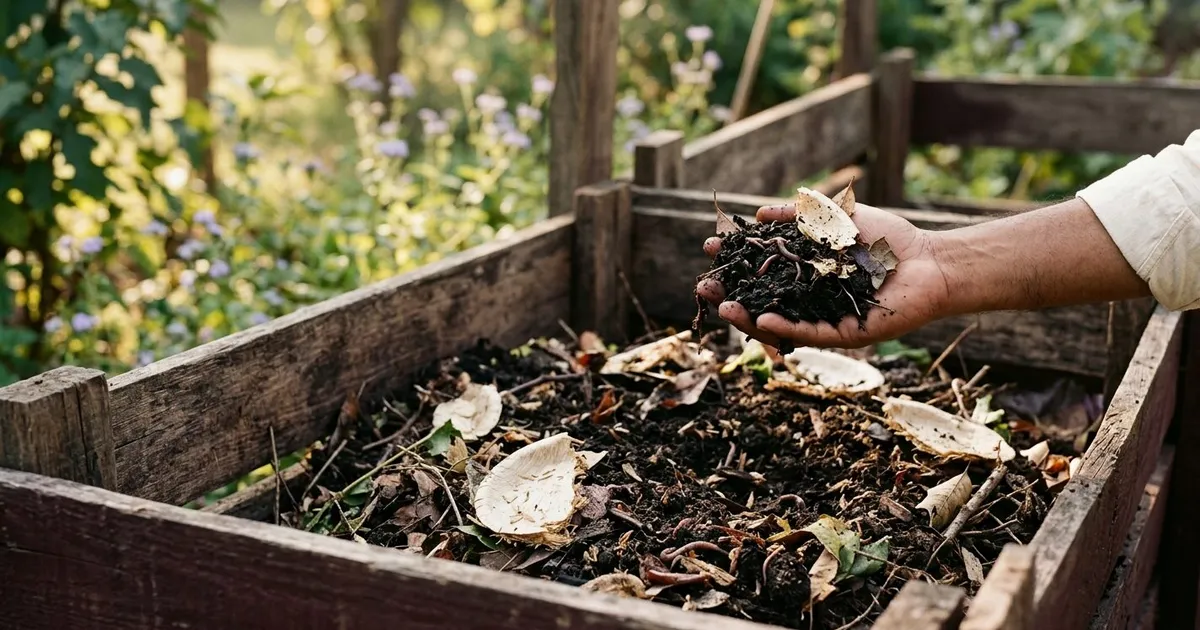
1. Home composting
Best option. Decomposes in 60–90 days.
If you have a home compost bin or compost pile, Aura plates go directly in. No preparation needed. The rice husk and bran composite breaks down in the presence of moisture and microbial activity — the same conditions that compost any organic material.
A few practical notes:
- Break or crumble the plate into smaller pieces before adding. Smaller pieces expose more surface area and decompose faster.
- The plate doesn’t need to be “clean” — residual food material actually helps kickstart decomposition.
- 60–90 days is the estimate at active composting temperatures (50–65°C in a healthy pile). In a passive pile or bin, expect 90–120 days.
After decomposition, what remains is a silica-rich organic material that functions as a mild soil amendment. Nothing synthetic.
2. Landfill
Works, but not ideal. Still better than plastic.
We know this isn’t what anyone wants to hear — but Aura plates disposed of in regular municipal waste will still degrade in landfill conditions. Slower than composting (landfills are oxygen-poor, which slows all biological breakdown), but the material will break down eventually.
The key point: Aura plates don’t persist. A plastic plate in a landfill will be there in 400 years. An Aura plate, in typical Indian landfill conditions, breaks down in months to a couple of years.
We don’t recommend landfill disposal because it wastes the composting value of the material. But if that’s what happened — you haven’t caused permanent damage. That’s a genuine difference from conventional disposable tableware.
3. Soil/garden burial
Effective. Particularly good for post-event cleanup.
Burying plates directly in garden soil works well, especially if you’re managing a venue or outdoor event. Dig them into an area you’re not actively gardening, cover with 4–6 inches of soil, and the natural soil microbiome handles the rest.
This is slower than active composting (soil temperatures are lower, microbial activity is less concentrated) — expect 3–5 months for full breakdown. But it’s practical at scale: no composting infrastructure required, no waste pickup coordination.
One note: don’t bury them where you’re growing food crops immediately — give the area a few months before planting, so the breakdown process completes.
What about washing and reusing?
Aura plates are designed as single-use. They can handle a meal, and they’re structurally sound — but we haven’t tested or certified them for multiple wash cycles or extended reuse. The structural integrity post-washing is unknown, and we’d rather be honest about that than claim a reuse use case we haven’t validated.
If you accidentally put one through a gentle hand wash and it held up — that’s probably fine. But we’re not marketing these as reusable, and we’re not going to start now.
The short version
- Compost it — best outcome, 60–90 days, material returns to soil
- Landfill — acceptable, decomposes eventually, nothing persistent left behind
- Bury it — practical for events, 3–5 months in garden soil
All three are better than plastic. Pick the one that fits your situation.
Have a question about disposal, bulk events, or composting infrastructure? Contact us on WhatsApp — we’re happy to help figure out what works for your use case.