
Navratri in Gujarat: Feeding the Garba Crowd Without Plastic
Nine nights of garba, huge crowds, stalls of dabeli, dhokla and chaas. How Gujarat food stalls can feed the Navratri rush on compostable plates, not plastic.
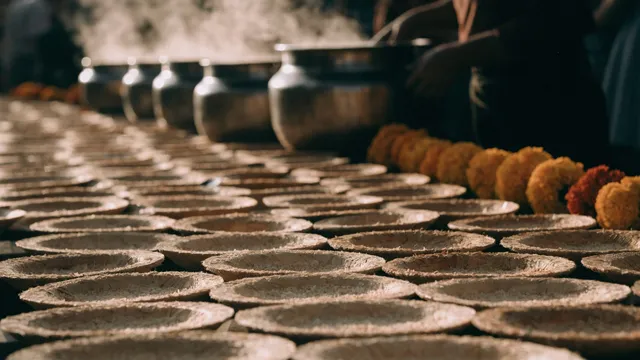
Two Novembers ago, on the fourth night of Navratri, I was standing behind a dabeli stall at a society garba ground in Vejalpur, Ahmedabad, watching the owner work. The queue was thirty deep. The tava was loud, the fafda oil was hot, and every ninety seconds another plate went out into the crowd. By the end of that night one stall had served hundreds of people. There were a dozen stalls on that ground. And this was one society, on one of nine nights, in one city.
That is the scale nobody plans for. If you run a food stall at garba, or you organise a garba ground, the biggest single-use tableware volume of your year lands in one nine-night window. The direct answer to how you feed that crowd without plastic is this: switch your plates, bowls and cups to compostable rice husk tableware, size them to the food you actually serve, and order the full nine nights in one go, three to four weeks ahead. The rest of this is the detail behind that.
I am writing this in July so you can plan, because Navratri 2026 falls later in the year. The nine nights run from Ghatasthapana on 11 October to Vijayadashami, Dussehra, on 20 October, per Drik Panchang’s Ahmedabad calendar. That gives you real runway. Use it.
The waste nobody counts
Weddings get all the attention for tableware volume. Navratri is quietly bigger in one way: it repeats for nine consecutive nights, at the same grounds, feeding the same kind of walking, snacking, non-sitting crowd.
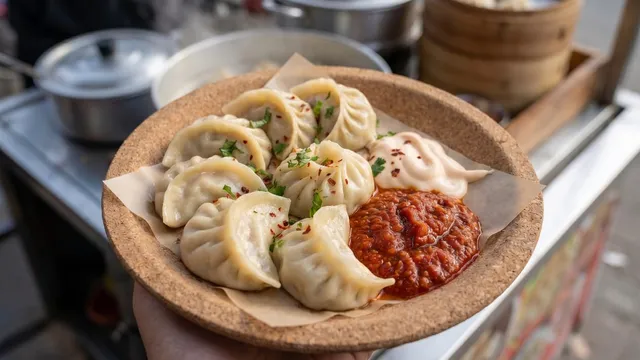
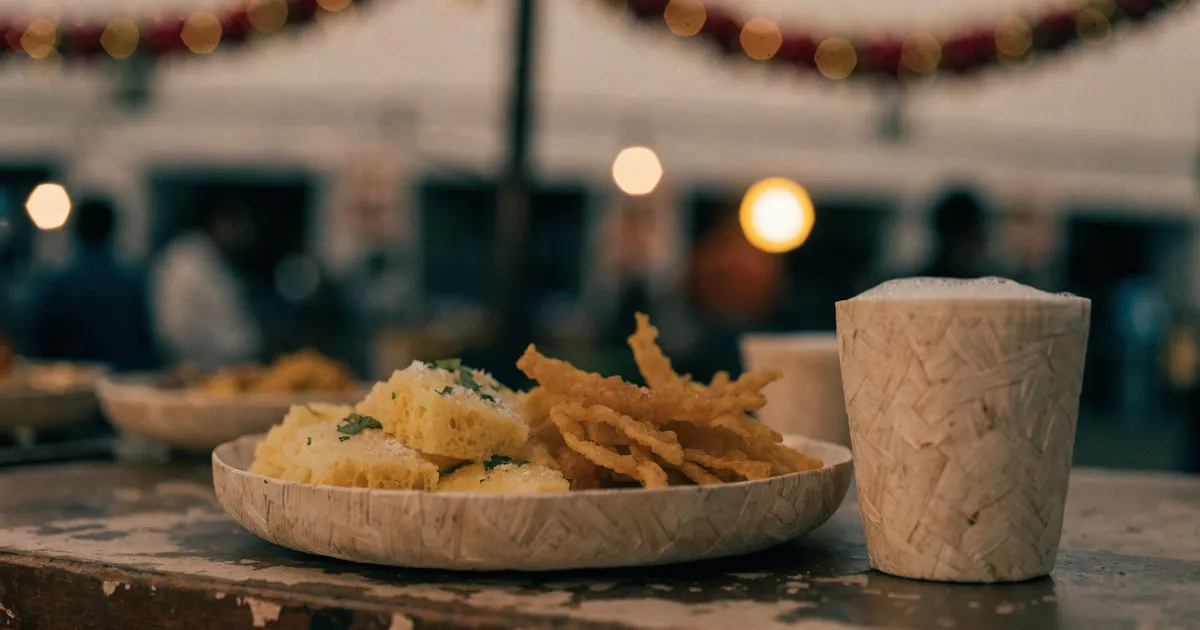
Think about what a garba crowd eats. Nobody sits for a thali. They eat standing, between rounds of dance: dabeli, dhokla, fafda-jalebi, pav bhaji, chaas to cool down, shrikhand at the end. Every one of those needs a throwaway plate, bowl, cup or spoon, and because people graze across the night, one person can go through three or four pieces in an evening, not one.
Multiply that by a full ground, then by nine nights. I will not hand you a made-up tonnage figure, because I have not seen a verified one for garba specifically. But the arithmetic is simple: one busy stall serving 500 plates a night is at roughly 4,500 plates across the season, and a mid-size ground has many stalls. That is a lot of material to send somewhere the morning after each night.
If those plates are plastic or thermocol, they sit in landfill for decades. If they are rice husk, they are gone from the soil in about three months.
Why plastic is the wrong bet in 2026
There are two reasons, and only one of them is about the environment.
The rules. India’s single-use plastic ban has been in force since 1 July 2022. It covers plastic plates, cups, glasses, cutlery, straws and thermocol, exactly the items a garba stall reaches for. On top of the national ban, municipal bodies in Gujarat, including the Ahmedabad Municipal Corporation, run enforcement drives at large public gatherings, and festival grounds are an obvious, high-visibility target. Many venues and society committees now write “plastic-free” straight into their stall agreements. I have taken the panicked Saturday-morning call from a caterer whose stock went unusable overnight after a drive. You do not want to be that stall on night three.
The plate itself. Thin paper plates go soft under pav bhaji gravy and hot dabeli. A plate that folds or leaks in a customer’s hand, in front of a queue, is a reputation problem, not just a material one. The real cost of a plate is not its sticker price, it is the cost per plate actually served without failing, and I break that full calculation down in our cost-per-cover guide.
What rice husk tableware actually is
Quick, no jargon. Our tableware is pressed from rice husk and rice bran, the shell and bran left over when rice is milled. The bran is the natural binder, so there is no plastic and no synthetic glue in it. Rice husk is about 20 percent silica by weight, which is what makes the plate rigid instead of floppy. It is compression moulded at around 180 to 200 degrees Celsius with no water added, which is why it resists moisture and holds up under gravy and chaas.
The things a stall owner actually cares about:
- It is FSSAI food-safe compliant, so it is cleared for serving food.
- It is microwave-safe, with no plastic coating to leach, which matters if you reheat.
- It is home-compostable and decomposes in 60 to 90 days after use.
- It has about a 12-month shelf life in dry storage, so buying ahead for the season is safe.
That last point is the one that makes nine-night planning possible: you can take delivery in September and it will be perfectly fine through Dussehra.
Sizing for garba food, not generic
The mistake I see is stalls ordering one plate size for everything. Garba food comes in very different portions, and matching the piece to the dish saves you money and mess. Here is the mapping we give Navratri stalls:
| What the stall serves | Right piece | Aura Farmers size |
|---|---|---|
| Dhokla, dabeli, khaman, fafda-jalebi, sandwiches | Snack plate | 7-inch plate |
| Pav bhaji, full plate, chinese, chaat | Main plate | 10-inch or 12-inch plate |
| Gota, dal, ras, shrikhand, ice cream | Bowl | 180 ml bowl |
| Chaas, masala milk, cold drink, juice | Tall cup | 250 ml cup |
| Tea, coffee, kadha | Small cup | 120 ml cup |
| Pav bhaji, shrikhand, ice cream | Spoon | 13 cm spoon |
Most single-item stalls only need one plate and one cup size. A full food court needs the range. The same size-to-portion logic we lay out for daily canteen tableware applies here, just compressed into nine intense nights instead of a slow year.
How to order for a nine-night season
Navratri behaves like wedding season: a known date, an unknown peak, and everyone sourcing in the same short window. Here is the method that works.
- Estimate one night, honestly. How many plates and cups does your stall move on a good night? Use last year if you have it, or ask the ground organiser for expected footfall.
- Multiply by nine, then add a buffer. Add roughly ten percent for spillage, breakage and a bigger-than-expected night. A weekend or Ashtami night will outrun a Monday.
- Order everything in one go. One order for the full season gets you settled pricing and one delivery, instead of renegotiating every second morning when stock is tight across the city.
- Take delivery three to four weeks before the first garba. That means locking your order by mid-September for the October nights. The 12-month shelf life means early delivery costs you nothing.
- Store it dry. Keep the stacks off the floor and away from damp, and every plate stays at full strength.
Any supplier promising you 5,000 plates in 48 hours mid-Navratri is either sitting on a cancelled order or overcommitting. Do not be the stall depending on that.
After the night: disposal
Compostable only helps if the plates end up in the right stream. The morning-after routine for a garba ground is simple:
- Put out separate bins for tableware waste and for plastic. If food scraps and rice husk plates go together, even better, they compost as one.
- Send the tableware waste to a composting facility or garden-waste stream where the ground or the municipality has one.
- Where there is no composting set up, still keep the plates out of the plastic bin. Rice husk breaks down in 60 to 90 days regardless, so keeping it separate means it decomposes instead of being landfilled as mixed waste.
A garba ground that visibly segregates and composts also has something honest to say to the society and to any inspector who walks in.
Where this does not make sense
I will be straight about the limits, because that is what earns trust.
If your stall serves only cold, dry, wrapped items, a bag of sev or packaged chips, you may not need a plate at all, and the greenest choice is no tableware. Do not buy plates to look eco.
If you are a tiny single-night stall doing 50 plates total, the per-piece cost of any quality compostable plate is higher than the cheapest banned plastic, and the volume is too small for bulk pricing to close the gap much. It is still the compliant and honest choice, but I will not pretend the economics are dramatic at that size. Rice husk earns its keep at real garba volume, across nine nights, where failure and fines are the expensive outcomes, not the plate.
And if a ground insists on the absolute lowest sticker price and does not care about the ban, we are not the right supplier. We are the right supplier for stalls and organisers who want to serve the crowd cleanly, pass an inspection without a cold sweat, and not leave a landfill behind on Dussehra morning.
Navratri is the best of Gujarat: nine nights of the whole neighbourhood out together, eating and dancing. The plates should not be the part of it that outlives everyone by fifty years. Plan the season now, size it to the food, order once, and feed the garba crowd on something the soil takes back.
If you run stalls or a ground and want the nine-night numbers worked out, message us and we will size it with you.
Sources: Navratri 2026 dates for Ahmedabad, Drik Panchang Shardiya Navratri calendar (Ghatasthapana 11 October, Vijayadashami 20 October 2026). Single-use plastic ban, in force in India since 1 July 2022.
Aura Farmers makes biodegradable tableware, plates, bowls, cups and cutlery from rice husk and rice bran. For Navratri and bulk orders, reach us on WhatsApp at +91 81403 47773. Made in Ahmedabad, shipped pan-India.
Frequently Asked Questions
What plates are best for Navratri food stalls?
For garba stalls, compostable rice husk plates in two sizes cover almost everything. A 7-inch plate handles snack items like dhokla, dabeli and fafda-jalebi, while a 10-inch or 12-inch plate handles pav bhaji and full plates. Rice husk plates stay rigid under hot, oily and gravy foods and do not go soggy the way thin paper plates do, so they hold up through a busy nine-night rush.
When should I order tableware for a nine-night Navratri season?
Order at least three to four weeks before the first night of garba. Navratri is a concentrated peak, so every stall and organiser in Gujarat is sourcing in the same short window, and last-minute stock is unreliable. Estimate your plates and cups for all nine nights in one go, add about ten percent as buffer, and place a single order rather than scrambling night by night.
Are rice husk plates allowed under India's plastic-free rules?
Yes. India's single-use plastic ban, in force since 1 July 2022, prohibits plastic plates, cups, glasses, cutlery, straws and thermocol used for one-time food service. Rice husk and rice bran tableware contains no plastic and no synthetic coating, so it sits on the compliant side of that rule and of the plastic-free norms many Gujarat venues and municipal bodies push during festival season.
How much tableware does a garba food stall need for nine nights?
Work it out per night, then multiply by nine. If a single stall serves around 500 plates a night, that is roughly 4,500 plates for the season before buffer. Add cups for chaas and cold drinks, bowls for gravy items, and spoons for pav bhaji and shrikhand. Order everything together so your pricing and delivery are settled once, not renegotiated every second day.
How do you dispose of compostable plates after a garba event?
Keep the tableware waste separate from plastic at the ground. Rice husk plates, bowls and cups are home-compostable and break down in roughly 60 to 90 days, so they can go to a composting facility or garden waste stream. Even where a venue has no composting set up, keeping them out of the plastic bin means they can still decompose instead of sitting in landfill for years.