
Rice Husk vs Bagasse vs Areca vs Paper: An Honest Comparison
Rice husk vs bagasse, areca leaf and paper pulp. A head-to-head on strength, oil resistance, heat, cost and compost time. No single winner for everything.
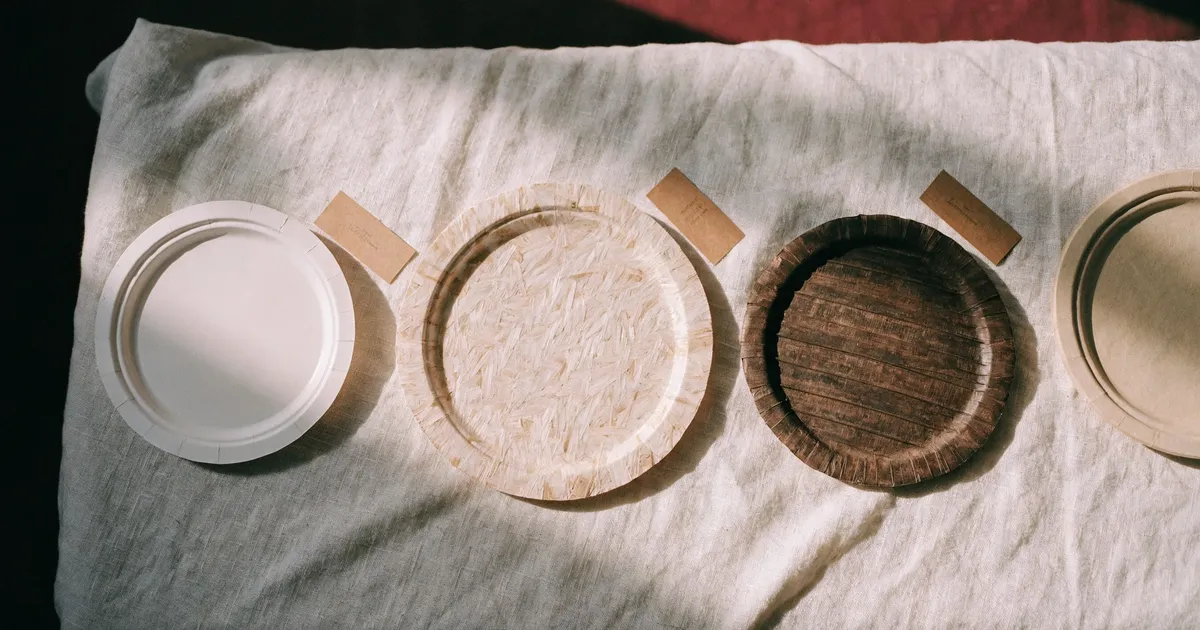
Last winter a wedding caterer from Vadodara sat across from me with four sample plates lined up on the table. Rice husk, bagasse, an areca leaf plate and a plain paper pulp one. He pressed the centre of each with his thumb, tilted them to the light, and asked the only question that mattered to him: “which one survives 400 people eating dal and rice standing up?”
That is the honest way to compare these materials. Not which is greenest on paper, but which one does the job in front of you. So here is a straight comparison of bagasse vs rice husk plates, and areca leaf and paper pulp alongside them, with no material treated as the hero.
The short answer: there is no single winner. Each of the four fits a different job. Rice husk composite is best for gravy and oily meals, areca leaf gives the most premium rustic look, bagasse is a solid mid cost workhorse for dry to medium food, and plain paper pulp is the cheapest for light, dry snacks. Below is why.
What each material actually is
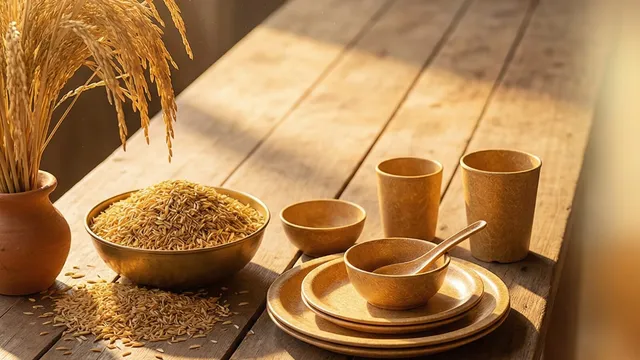
- Rice husk composite is made from rice husk (the outer shell removed during milling) plus rice bran, compression moulded under heat. The husk is about 20% silica by weight, which is what makes it stiff. No water is added during forming, and the bran acts as the natural binder, so there is no plastic and no synthetic glue. We wrote about that chemistry in detail in why rice husk makes better plates.
- Sugarcane bagasse is the fibre left after the juice is crushed out of sugarcane. It is pulped and pressed into shape. Genuine agricultural waste, like husk.
- Areca (palm) leaf plates are heat pressed from the fallen leaf sheath of the areca palm. The leaf falls on its own, gets collected, cleaned, and pressed. Nothing is added.
- Moulded paper pulp is made from wood or recycled paper fibre (sometimes mixed with other plant fibre). It is the most common cheap disposable format worldwide.
At a glance: how the four compare
| Attribute | Rice husk composite | Sugarcane bagasse | Areca (palm) leaf | Moulded paper / pulp |
|---|---|---|---|---|
| Raw material | Rice husk + bran, milling waste | Fibre left after crushing cane | Fallen areca palm leaf | Wood or recycled paper fibre |
| Strength / stiffness | Rigid, holds shape | Firm when dry, moderate | Very rigid, sturdy | Weakest, flexes easily |
| Oil / liquid resistance | High, no water in forming | Absorbs, softens over time | Good, natural waxy leaf | Low, needs a coating |
| Heat / microwave | Microwave safe, no coating | Microwave and oven safe | Microwave ~2 min, oven to ~180°C | Depends on the coating |
| Look and feel | Warm brown, matte, premium | Plain off white or brown | Rustic, grainy, premium | Generic, plain |
| Typical cost | Higher | Low to mid | Mid to high | Lowest |
| Compost time | 60 to 90 days | ~30 to 90 days (longer at home) | ~6 to 8 weeks | ~2 to 3 months if uncoated |
| Bleaching / chemicals | None | Often chlorine bleached | None, chemical free | Often bleached, PFAS coatings common |
Strength and oil resistance: where meals are won or lost
This is the part the Vadodara caterer cared about, and it is the biggest real difference between the four.
Rice husk holds liquid best because no water goes into the forming process, and the silica rich structure does not absorb. A curry can sit on it for ten minutes without the plate going soft.
Bagasse is the opposite trade. It is genuinely biodegradable and lighter to carry, but bagasse pulp absorbs water over time. Leave a wet sabzi on it and it slowly gives. That is a material constraint, not a manufacturing defect.
Areca leaf is surprisingly tough and handles wet food well thanks to the leaf’s natural surface, though every plate is a slightly different shape and size because it comes from a real leaf.
Plain paper pulp is the weakest for wet food. Without a coating it soaks through. With a coating, you have to ask what the coating is, which brings us to the honest part.
The chemical question: bleaching and coatings
If a plate is bright white, something usually made it white.
Pulp bleaching commonly uses chlorine dioxide, hydrogen peroxide or ozone. Chlorine based bleaching of pulp produces chlorinated organic compounds, including dioxins, as a by product in the wastewater. That applies to both white bagasse and white paper pulp. Unbleached, natural brown versions of both avoid it entirely. We covered how to read these claims in our guide to greenwashing in eco tableware.
Paper and moulded pulp have a second issue: grease resistance. PFAS (“forever chemicals”) were for years among the cheapest and most effective grease proofing agents for moulded fibre and paper food packaging. The regulatory picture has moved fast. The US FDA confirmed in 2024 that manufacturers had completed a voluntary phase out of PFAS grease proofing agents in paper and paperboard food packaging, and as of early 2026 twelve US states, including California and Colorado, restrict intentionally added PFAS in foodservice ware. India does not yet have an equivalent rule, so with imported or unbranded pulp products, the coating is worth a direct question.
Areca leaf and rice husk composite sidestep this cleanly: areca is bare pressed leaf with no bleaching or binder, and rice husk composite uses rice bran as the binder with no coating.
Compost time: closer than you would think
All four break down within a few months in composting conditions, so this is rarely the deciding factor.
- Areca leaf is usually fastest, roughly six to eight weeks, and is backyard compostable per most areca plate makers.
- Rice husk composite decomposes in 60 to 90 days after use.
- Bagasse is put at around 30 to 90 days in an active compost by manufacturer and composting guides, longer in a slow home pile.
- Uncoated paper pulp is similar, a couple of months. A PFAS coated pulp plate is the exception: studies show the coating releases PFAS across a long decomposition window and leaves residue, which defeats the point.
So which one should you actually buy?
Match the material to the meal:
- Gravy, oily, full thali meals: rice husk composite or areca leaf. Both stay stiff and resist liquid through a full sitting.
- Dry snacks, dhoklas, chaat, dessert: bagasse or plain paper pulp are enough, and cheaper.
- Premium look for a wedding or a brand event: areca leaf for the rustic natural texture, or rice husk for a warm matte finish that still behaves like real tableware.
- Lowest cost, high volume, light food: plain unbleached paper pulp. Just confirm it is uncoated and unbleached.
You can see the full rice husk range, sizes and specs on our products page and match a size to your menu there.
Where rice husk honestly loses
I sell rice husk plates, so let me be clear about what it does not win.
It is heavier than bagasse or paper pulp. Noticeably so. For staff stacking and carrying thousands of plates at a large event, that weight adds up, and a lighter pulp plate is genuinely easier to handle.
It costs more than plain paper pulp. Compression moulding needs precise heat and pressure, and the husk still has to be collected, cleaned and processed. If your only goal is the lowest possible price per plate for dry food, paper pulp beats us on cost every time.
Areca can look more premium for a rustic themed event, because that raw leaf texture is hard to fake.
What rice husk gives back is a plate that behaves like real tableware under real food, with no bleaching, no coating and no plastic. For a gravy heavy Indian meal, that is usually the trade worth making. For a bag of dry namkeen, it is honestly overkill.
Pick the material for the meal, not the marketing. If you want help matching sizes to a specific menu or headcount, message us and we will talk you through it.
Sources: compost timelines for bagasse and areca from manufacturer and composting guides (mana-eco, bioleaderpack, envome, agrileaf); pulp bleaching by products from pulp chemistry references (ScienceDirect, Princeton OTA); PFAS use, the FDA 2024 voluntary phase out, and the twelve US state restrictions from NRDC, US FDA and state law trackers. Rice husk figures are Aura Farmers’ own product data.
Aura Farmers makes biodegradable tableware, plates, bowls, cups and cutlery, from rice husk and rice bran. For bulk orders or help choosing the right plate for your menu, reach us on WhatsApp at +91 81403 47773. Made in Ahmedabad, shipped pan India.
Frequently Asked Questions
Which is better, bagasse or rice husk plates?
Neither wins outright. Rice husk plates are stiffer and hold oily, gravy heavy meals without softening. Bagasse pulp is lighter and usually cheaper, but it soaks up liquid over time. For a full Indian thali, rice husk holds up better. For dry snacks or high volume budget events, bagasse is fine.
Are areca leaf plates microwave safe?
Yes. Areca palm leaf plates are generally microwave safe for about two minutes on high and oven safe up to around 180 degrees Celsius for a short time. They are pressed from bare leaf with no plastic coating or chemical binder, so there is nothing to melt or leach.
Do bagasse and paper pulp plates contain chemicals?
They can. Many white bagasse and paper pulp plates are chlorine bleached, and paper pulp has historically used PFAS coatings for grease resistance, which several US states now ban. Unbleached brown pulp and coating free products avoid this, so ask the supplier what bleaching and coating they use.
Which biodegradable plate decomposes fastest?
All four break down within a few months in composting conditions. Areca leaf is usually quickest at about six to eight weeks. Rice husk composite runs 60 to 90 days. Uncoated bagasse and paper pulp fall in a similar range. A PFAS coated pulp plate, however, takes far longer and leaves residue behind.
Which disposable plate is best for a wedding with gravy food?
For wet, oily food like dal, curry and sabzi, rice husk composite or areca leaf hold up best because they resist liquid and stay stiff through a full meal. Plain paper pulp is the weakest choice for gravy, because it absorbs moisture and can soften part way through eating.