
This World Environment Day, Audit What Your Event Throws Away
World Environment Day is 5 June. Skip the lecture. Run a simple five-step waste audit on your next event or canteen day, see what you throw away, then swap it.
A few weeks ago I was standing behind a banquet hall in Ahmedabad after a 600-plate dinner had wrapped up. The lights were still on, the band was packing up, and near the service gate sat a row of black garbage bags, tied and slumped against the wall. The manager kicked one and it crunched. Thermocol. Hundreds of plates, side plates, cups, and spoons from a single evening, already on their way to a landfill where they would outlive the couple who got married that night.
He asked me a fair question. “How much of this is actually my problem?” The honest answer is that nobody knows until they count it. So this World Environment Day, instead of another lecture about plastic, I want to hand you the one thing that actually changes behaviour: a simple event waste audit you can run yourself. A waste audit just means looking at exactly what your event, canteen, or venue throws away in one typical outing, in numbers, so you can swap the worst offenders and measure the difference. That is it. No consultant, no software.
What is an event waste audit, and why bother on World Environment Day
World Environment Day falls on 5 June every year. In 2026 it is hosted by the Republic of Azerbaijan in Baku, under the theme “Inspired by Nature. For Climate. For Our Future.” It is a good peg, but the point is not the poster. The point is that a “World Environment Day plastic free event” is easy to announce and hard to prove. An audit is what turns the announcement into something real.
Here is the context that makes it worth your afternoon. India generated about 4.1 million tonnes of plastic waste in a single year, according to the Central Pollution Control Board’s Annual Report on plastic waste management for 2020-21. Divide that across the calendar and it is more than 11,000 tonnes every single day. Food events, canteens, and venues are a steady contributor to that pile, one plate and one cup at a time. You cannot fix the national number. You can fix your event’s number, and an audit tells you where it hides.
The five-step waste audit anyone can run
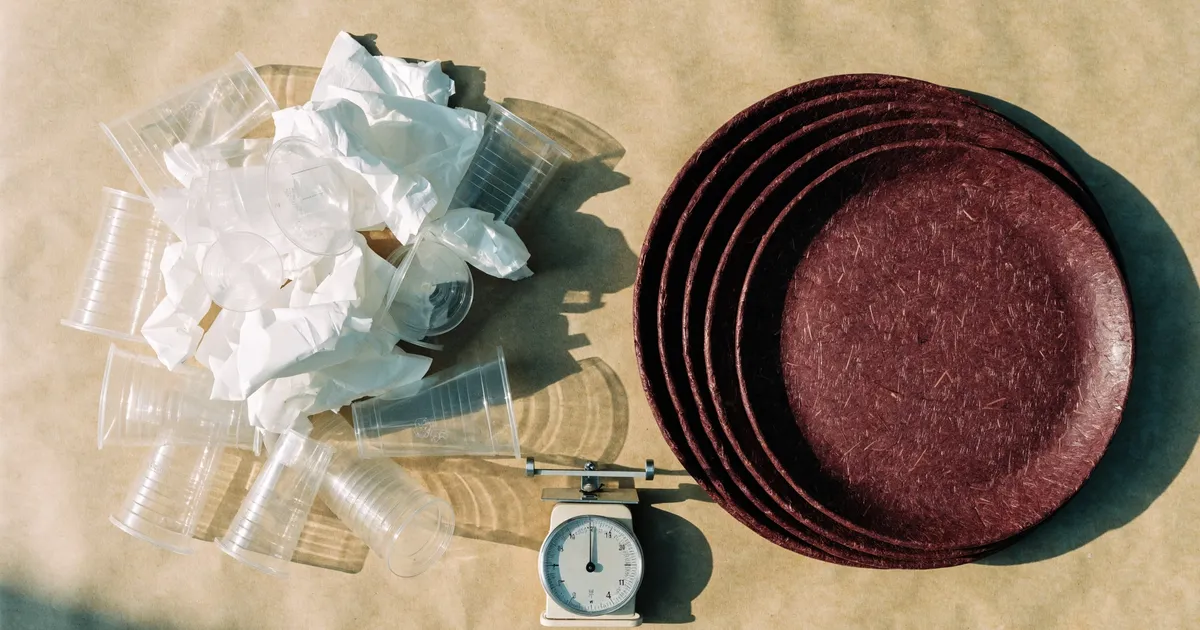
You do not need a lab. You need a notebook, a kitchen weighing scale, and one honest look at your own bins.
Step 1: List every single-use item from one typical event or day. Walk your service line and write down everything that gets used once and thrown. Dinner plate, side plate, bowl, tea cup, water cup, spoon, napkin, food packaging, cling film, garbage liners. Do not estimate from memory. Watch one real event or one real canteen lunch and note what actually leaves the kitchen.
Step 2: Weigh or count a representative sample. You do not have to weigh every bag. Take the waste from a known number of covers, say 100 plates worth, and either count the single-use pieces or weigh the bags. A thermocol plate weighs almost nothing on its own, which is exactly why people ignore it. Multiply it by 600 covers, each with a plate, a bowl, two cups, and a spoon, and the “almost nothing” becomes several thousand pieces of plastic from one evening.
Step 3: Identify what can be swapped. Go down your list and mark each item plastic, thermocol, or already compostable. The plastic and thermocol lines are your swap list. Plates, cups, bowls, and spoons are usually the biggest and easiest wins, and they are also the items already covered by the single-use plastic ban that has been in force across India since 1 July 2022. Here is the straight swap most food operators land on:
| Item | Common single-use version | Compostable swap |
|---|---|---|
| Dinner plate | Thermocol or plastic | Rice husk 10” or 12” plate |
| Side plate | Plastic | Rice husk 7” plate |
| Bowl | Plastic | Rice husk 180 ml bowl |
| Tea or coffee cup | Plastic or coated paper | Rice husk 120 ml or 250 ml cup |
| Spoon | Plastic | Rice husk 13 cm spoon |
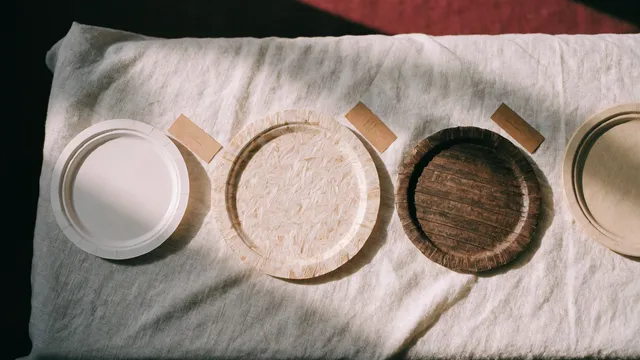
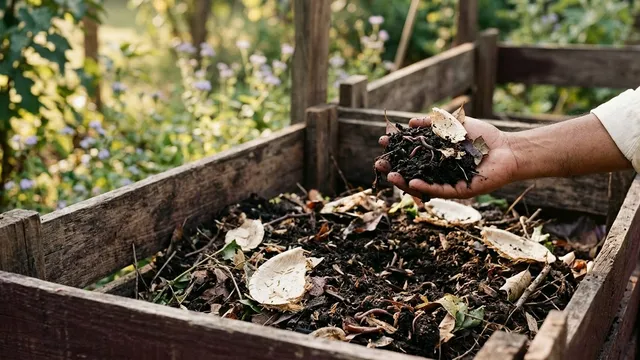
Rice husk tableware matters here for a practical reason, not a poetic one. It is moulded from rice husk and bran under heat with no water and no plastic coating, so it holds gravy and full thali service without going soft, and it home-composts in about 60 to 90 days after use instead of sitting in a landfill for decades.
Step 4: Measure the difference. Run the next event with the swaps in place and repeat Step 2. Same covers, same menu type, weigh again. Now you have two numbers you can put in front of anyone: plastic and thermocol pieces before, and after. That before-and-after is the whole game. It is what lets you tell a client, a boss, or a municipal inspector something true instead of something hopeful.
Step 5: Repeat next event. One audit is a snapshot. Two audits is a trend. Keep a running sheet across a few events and you will spot the leaks you missed the first time, usually packaging and napkins, and you will see the plastic count fall. This is also where composting closes the loop, because a compostable plate only delivers its benefit if it actually reaches a compost stream instead of the general bin. Our guide to setting up composting at an event venue covers that side in detail.
Where an audit does not help, and the honest trade-offs
I would rather you go in clear-eyed than disappointed, so here is where this falls short.
An audit measures, it does not fix. If you count your waste and then change nothing, you have wasted an afternoon. The value is entirely in acting on Step 3.
You can only audit what you control. Guests bring outside water bottles and mithai boxes. A canteen cannot police every wrapper that walks in. Audit your own service line first and do not get lost chasing waste you did not create.
Weight can mislead. A stack of thermocol plates weighs far less than the food scraps beside it, so if you only weigh bags, plastic looks trivial. That is why Step 2 says count as well as weigh. For plastic, the piece count is the honest number.
Compostable is not free, and it is not magic. Rice husk plates cost more per piece than thermocol, and they still need a real disposal route to compost. If your plates go into the same municipal bin as everything else, you have bought a nicer plate, not a smaller footprint. Weigh the true cost properly, and our note on switching an event over without operational headaches walks through the cost-per-cover maths.
Start small, this week
You do not need to overhaul anything before 5 June. Pick one event or one canteen day. Run the five steps. Swap the plates and cups first, because they are the biggest and the ones the ban already targets. Measure again next time. That is a genuine World Environment Day plastic free event, backed by your own numbers rather than a hashtag.
If you want the swaps ready to compare, our full catalogue of rice husk plates, bowls, cups, and spoons lists sizes, pack counts, and specs, and you can send us the item list from your audit for a straight quote on WhatsApp.
Sources: World Environment Day 2026 date, host, and theme per the official worldenvironmentday.global 2026 page (UNEP). India plastic waste generation of about 4.1 million tonnes per year per the Central Pollution Control Board Annual Report 2020-21 on implementation of the Plastic Waste Management Rules. Single-use plastic ban in force since 1 July 2022 per the Ministry of Environment, Forest and Climate Change.
Aura Farmers makes biodegradable tableware, plates, bowls, cups, and cutlery from rice husk and rice bran. For bulk orders, reach us on WhatsApp at +91 81403 47773. Made in Ahmedabad, shipped pan-India.
Frequently Asked Questions
How do I run a waste audit for an event?
Pick one typical event or one typical day. List every single-use item that gets used and thrown, from plates and cups to spoons and packaging. Count or weigh a representative sample of what ends up in the bins. Note which items are plastic or thermocol and could be swapped for a compostable version. Do the swap for the next event and measure the difference. Repeat so the numbers keep improving.
What can replace plastic plates at events?
Rice husk plates are a direct swap for plastic and thermocol plates. They are made from rice husk and bran with no plastic coating, hold gravy and full meals without going soggy, are FSSAI food-safe, and home-compost in about 60 to 90 days after use. Areca leaf plates and moulded pulp are other options, though pulp tends to soften faster under wet food.
Is single-use plastic banned in India?
Yes. Since 1 July 2022, the Ministry of Environment, Forest and Climate Change has banned identified single-use plastic items with low utility and high littering potential. That list includes plastic plates, cups, cutlery, straws, and thermocol (polystyrene) plates and cups, which are exactly the items a food event tends to throw away in bulk.
When is World Environment Day 2026?
World Environment Day is observed on 5 June every year. In 2026 it is hosted by the Republic of Azerbaijan in Baku, under the theme 'Inspired by Nature. For Climate. For Our Future.'
How long do rice husk plates take to decompose?
Aura Farmers rice husk and bran tableware is home-compostable and breaks down in roughly 60 to 90 days after use, given normal compost conditions with moisture and airflow. It does not need an industrial facility, though it composts faster in an active pile than in a dry corner.